

Short-term projects can create immediate pressure to move more products, clear a work area, restock a warehouse, or complete a time-sensitive installation. Choosing the right equipment early helps teams protect the schedule, control labor demands, and keep materials moving safely. For temporary needs, reviewing options for forklift rental St. Louis, MO, can be a practical first step once the job requirements are clear. The best choice is not always the largest or most powerful machine. It is the machine that fits the load, work environment, available operators, and project timeline. A compact electric pallet truck may be ideal for a few days of indoor pallet movement, while an outdoor construction project may need a telehandler with more ground clearance and reach.
Why Equipment Choice Matters On Short-Term Jobs
A poor equipment match can create delays that outlast the project itself. A machine that cannot turn in the aisle, reach the required rack level, travel across the site surface, or safely lift the heaviest load may force workers to rely on slower manual processes. That can increase fatigue, congestion, product damage, and downtime. Consider a warehouse preparing for a seasonal inventory surge. A standard forklift might handle dock work well, but a reach truck could be more productive in tall, narrow storage aisles. Matching the machine to the specific task allows the team to handle the added volume without disrupting regular operations.
Start With The Work, Not The Machine
Begin with a clear description of what needs to be moved. Record the material type, maximum weight, pallet dimensions, travel distance, lift height, frequency of movement, and expected project duration. This information is more useful than choosing a machine based on what was used on a previous job.
Questions To Ask First
- What materials will be moved, and are they palletized, oversized, loose, or fragile?
- What is the heaviest load expected during the project?
- How high must materials be lifted or placed?
- How many loads must move each hour or shift?
- Will work take place indoors, outdoors, or in both locations?
- How many days, weeks, or months will the equipment be needed?
Compare Common Equipment Types
- Forklifts: A flexible option for lifting and transporting palletized loads around docks, warehouses, and yards.
- Pallet trucks: Useful for moving pallets short distances on smooth, level floors.
- Reach trucks: Built for narrow aisles and higher storage locations in indoor warehouse settings.
- Telehandlers: Well-suited to outdoor jobs requiring greater forward reach, lift height, and rough-terrain capability.
- Scissor lifts: Designed to raise personnel and tools vertically for elevated work.
- Aerial lifts: Helpful when workers need access to elevated areas that are not directly above the machine.
- Conveyors: Practical for continuous movement of boxes, packages, debris, or loose materials.
Check Site Conditions Before Ordering
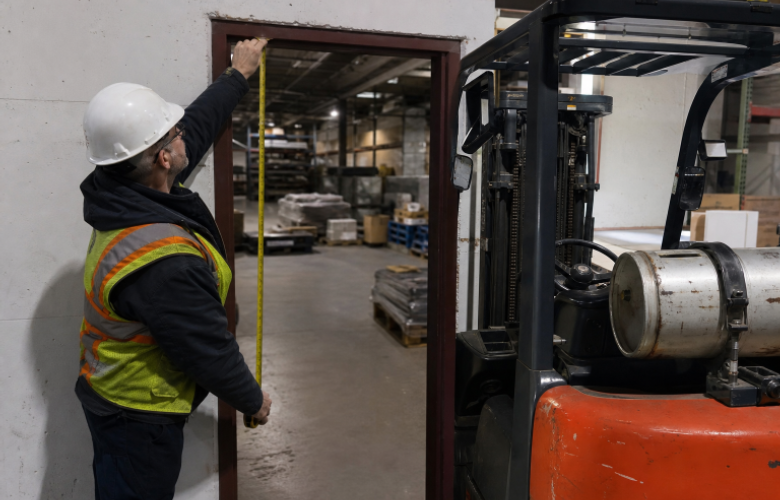
Measure the site before delivery. Doorways, gates, aisle widths, turning areas, dock openings, ceiling clearance, and overhead obstructions can all affect whether a machine can operate as planned. Also inspect floor condition, slope, drainage, and weight-bearing capacity. Outdoor work may require equipment that can handle gravel, mud, uneven ground, or changing weather conditions.
Calculate Capacity And Reach
Rated capacity should match the actual job, not an estimate based on average loads. Load dimensions, the load center, attachment weight, lift height, and mast position can change how much a machine can safely handle. A long or uneven load may reduce usable capacity even when its total weight seems acceptable. Review the equipment data plate and manufacturer’s instructions before operation. Do not assume that a machine rated for a certain weight at ground level has the same capacity at maximum height or with a specialized attachment installed.
Choose The Right Power Source
- Electric equipment: Often works well indoors because it is quieter and has no tailpipe emissions at the point of use. Confirm charging access and battery runtime.
- Propane equipment: Can support flexible indoor or outdoor applications when the work area has suitable ventilation and fuel handling procedures.
- Diesel equipment: Common for demanding outdoor work, heavier loads, and rougher surfaces.
- Manual equipment: A cost-conscious choice for light loads, short travel distances, and occasional use.
Review Safety And Training Needs
Safety planning should happen before equipment arrives. Operators need to be qualified for the specific equipment type, and the work area should account for pedestrians, blind corners, ramps, loading docks, and restricted visibility. OSHA explains that powered industrial truck operators must complete training and evaluation before operating equipment. Review OSHA’s powered industrial truck guidance when building the project safety plan.
Safety Points To Include
- Separate vehicle routes from pedestrian walkways where possible.
- Use seat belts and required protective equipment.
- Keep loads centered, stable, and within rated limits.
- Slow down near doors, ramps, corners, and blind spots.
- Do not allow unauthorized passengers.
- Remove unsafe equipment from service until repairs are completed.
Inspect Equipment Before Use
Perform a pre-use inspection at delivery and before each shift. Check tires, forks, chains, steering, brakes, lights, alarms, fluid leaks, battery or fuel condition, and visible damage. The OSHA sample daily checklists for powered industrial trucks are a useful reference for identifying issues to report before work begins.
Compare The Full Cost Of Renting
The daily or weekly rental rate is only part of the total project cost. Compare delivery and pickup fees, fuel or charging expenses, attachments, damage waivers, insurance requirements, maintenance coverage, overtime charges, extension fees, and late-return policies. Also factor in operator training, site preparation, and the cost of delays if the selected equipment is undersized.
Use A Simple Selection Checklist
- Describe the material and identify the maximum load.
- Measure doors, aisles, travel paths, and lift locations.
- Record required lift height, reach, and travel distance.
- Select equipment for indoor, outdoor, or dual-use work.
- Confirm operator qualifications and site safety controls.
- Compare the complete project cost, not just the base rate.
- Confirm delivery timing and service support.
- Inspect the machine and document existing damage before use.
Common Questions
Is Renting Equipment Better For A Short Project?
Renting can make sense when demand is seasonal, equipment needs are temporary, or the job requires a specialized machine that will not be used regularly. Buying may be more practical for equipment used consistently over many years.
How Much Capacity Is Enough?
Choose capacity based on the heaviest planned load, the required lift height, the load shape, and any attachments. The machine’s rating plate and operating limits should guide the decision.
Can One Machine Handle Every Task?
Not always. A general-purpose forklift may be effective for dock work but unsuitable for narrow aisles, elevated personnel work, rough terrain, or exceptionally high storage racks.
What Should Be Checked At Delivery?
Confirm that the correct machine and attachments arrived, inspect visible condition, test safety devices and controls, verify fuel or battery level, and note any damage on the delivery record before the equipment enters service.
Conclusion
Short-term material-handling projects still deserve careful planning to avoid delays, unnecessary costs, and safety risks. By defining the work, measuring the site, confirming load capacity, choosing an appropriate power source, reviewing safety requirements, and comparing total rental or operating costs, project teams can select equipment that matches the demands of the job. It is also important to consider lift height, maneuverability, operator training, ground conditions, and access limitations before equipment arrives on site. A clear plan helps reduce downtime, improve workflow, and ensure that materials are handled efficiently throughout the project. Investing time in proper preparation supports a safer, more productive start from day one and helps crews complete the work on schedule with fewer unexpected interruptions.