

From winter slush on River Street to pollen, rain film, and daily commuter grime, Hackensack drivers need a wash routine that fits both their vehicle and the season. For drivers who want to protect their vehicle’s finish and prevent corrosion, Spotless Auto Laundries offers touchless, soft-cloth, and self-service car wash options at one convenient location in Hackensack, NJ. The site explains how each wash type works and lets customers check prices, find hours, and browse coupons and unlimited wash plans. With self-service and touchless bays open 24 hours a day, Spotless Auto Laundries gives Bergen County drivers a flexible way to keep their cars clean and shiny year-round. Drivers considering wash-and-maintenance services can review quick lube Hackensack NJ information when a cleaning visit also raises questions about oil changes or fluid service.
The best wash is not always the strongest or most expensive one. A good choice depends on the amount of dirt on the vehicle, the paint finish, any accessories, the available time, and whether road salt or heavy grime needs attention.
Why the Wash Method Matters
Dirt is not all the same. Fine sand, brake dust, pollen, dried insects, tree residue, oily road film, and deicing salt can each cling to a vehicle differently. Rubbing loose grit across dry paint can create marks, while leaving salt residue in place for long periods can make routine exterior care more difficult. A regular wash removes surface contamination, but it does not repair deep scratches, peeling clear coat, oxidation, or damaged trim. Those issues may require detailing or professional paint-care advice.
Touchless Washing: Best for Low-Contact Cleaning
A touchless wash uses cleaning solution and water pressure rather than spinning brushes or cloth strips. That lower-contact approach can suit drivers with dark paint, ceramic-coated vehicles, paint protection film, vinyl wraps, roof racks, antennas, or other accessories that make contact washing less appealing. It is often a sensible choice after a snowy commute, when the immediate goal is to rinse off fresh salt and slush without adding unnecessary friction.
The limitation is the cleaning strength. Thick mud, baked-on bugs, tar, and stubborn road film may remain after one touchless cycle. Inspect the finish afterward instead of assuming a stronger chemical setting will solve every problem.
Soft-Cloth Washing: Stronger Cleaning With Contact
Soft-cloth systems use fabric or foam to loosen dirt as the vehicle moves through the wash. This can be useful for a car that has been without a wash for too long or has visible road film on the lower doors, wheels, and bumpers. The same contact that improves cleaning can also be a concern when equipment is worn, when grit is trapped in the wash material, or when the vehicle has loose trim and delicate aftermarket parts.
Before entering, look over the facility, read posted vehicle restrictions, close windows, fold or remove accessories when the manufacturer recommends it, and follow staff instructions. If a finish is especially sensitive, a touchless wash or careful hand wash may be the better compromise.
Self-Service Bays: More Control for Careful Drivers
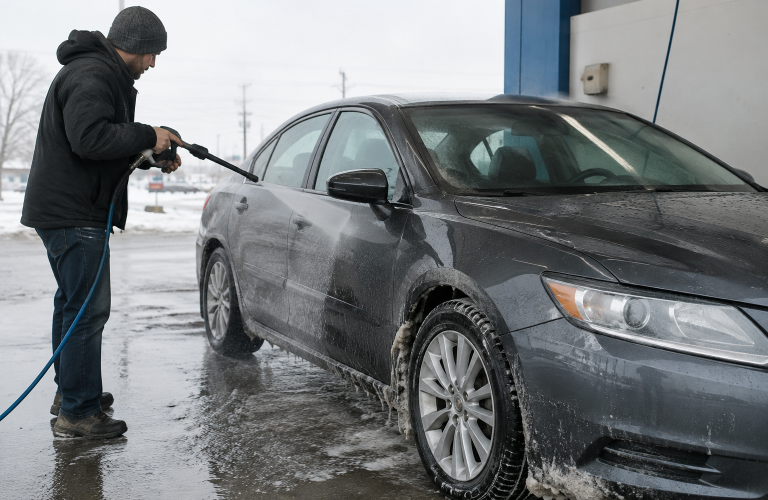
Self-service washing is useful when one area needs extra attention, such as muddy wheel wells after a Bergen County storm or salt residue along rocker panels. The driver controls the spray distance, soap application, and rinse time.
- Rinse loose grit from the entire vehicle before touching the paint.
- Apply soap from the roof downward.
- Give wheels, wheel wells, and lower panels extra attention.
- Rinse thoroughly until no soap remains.
- Dry with a clean microfiber towel when an appropriate drying area is available.
Do not drag a dirty bay brush across dry paint. Keep high-pressure water away from damaged seals, open windows, cracked lamps, and loose body panels.
Hand Washing at Home: Precision Requires Good Technique
Handwashing offers the most control, but the process depends on clean tools. Use vehicle-safe soap, a clean microfiber mitt, separate tools for wheels, and frequent rinsing. Work from the roof downward because lower panels generally carry more grime. Household dish cleaners and harsh degreasers may not be designed for automotive paint, trim, or protective products.
Home washing also creates runoff concerns. The EPA car-washing guidance recommends reducing runoff, using soap sparingly, and choosing surfaces that help keep wash water from flowing directly into storm drains. In many situations, a commercial wash is a more convenient choice for drivers without a suitable washing area.
How Winter Changes the Wash Schedule
Hackensack winters can mean repeated exposure to treated roads, slush, and dirty meltwater. Salt and brine collect around wheel wells, brake components, lower body panels, and the undercarriage. A quick wash with an undercarriage rinse after a storm can be more useful than waiting until the vehicle looks visibly dirty. For a commuter, removing fresh salt after a messy drive may matter more than adding a premium shine treatment.
Paint Protection and Special Finishes
Matte paint, wraps, ceramic coatings, paint protection film, and older clear coats deserve extra care. Follow the vehicle or product manufacturer’s cleaning instructions before selecting soaps, waxes, brushes, cloths, or drying methods. Ask whether a wash’s products are suitable for the finish, and remember that no wash method can reverse failing paint or serious cosmetic damage.
Water Use and Responsible Washing
Commercial facilities may use controlled spray systems and wastewater-management practices, although equipment and operating methods vary by location. At home, use a bucket instead of leaving a hose running, limit water flow with a shutoff nozzle, and spot-clean when a full wash is unnecessary. The EPA’s water-conservation tips also encourage using less water and avoiding unnecessary outdoor hose use.
Where Routine Washing Meets Basic Maintenance
A clean vehicle is easier to inspect. While drying the exterior, drivers may notice a damaged wiper, a loose trim piece, uneven tire wear, a fluid spot beneath the vehicle, or corrosion beginning around an exposed area. Washing is cosmetic care, not mechanical repair, but it can make maintenance concerns easier to spot. If there is a suspected leak, a warning light, a brake concern, or a tire issue, schedule an inspection rather than treating it as a cleaning issue.
A Simple Decision Guide for Hackensack Drivers
- Light weekly dirt: Choose touchless washing or a careful rinse.
- Heavy mud or road film: Consider a well-maintained soft-cloth wash or careful hand cleaning.
- Delicate paint or accessories: Use the lowest-contact method that still cleans effectively.
- Winter salt: Prioritize wheel wells and undercarriage rinsing.
- Interior mess: Use a vacuum to clean the area or arrange separate interior cleaning.
- Visible paint damage: Seek detailing guidance instead of repeatedly using stronger wash cycles.
Conclusion
The right car wash method for a Hackensack driver depends on the vehicle, dirt, weather, finish, and available time. Touchless washing can be ideal for routine low-contact care, while soft-cloth, self-service, and hand washing each have a place when conditions call for more cleaning power or control. A thoughtful routine keeps the vehicle cleaner while helping avoid unnecessary paint contact, water waste, and overlooked maintenance concerns.