

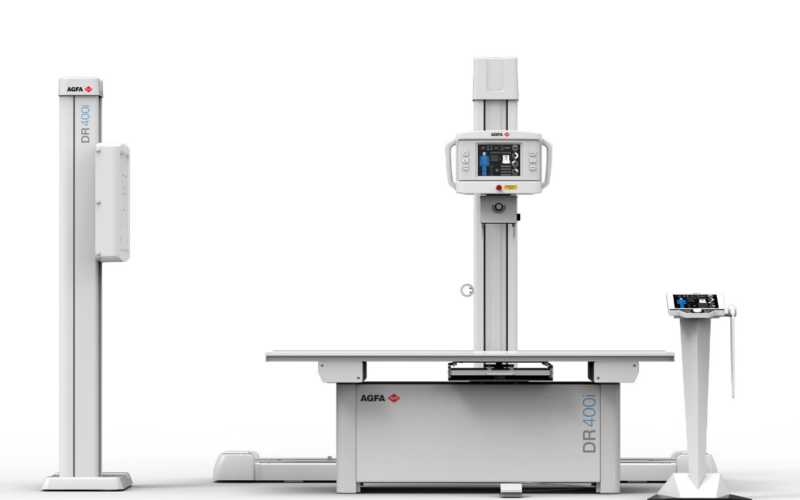
The future of mobile imaging is no longer just about mobility. As of 2025, new DR Mobile solutions are revolutionising medical imaging, enabling faster diagnoses, safer environments, and patient-centred medical practices. Present-day hospitals demand equal confidence in mobile imaging rooms as in fixed rooms, as reflected in imaging solutions such as the DR400i.
What’s happening now is a marked shift away from ‘good-enough’ solutions in mobile imaging towards solutions which are an integral part of everyday practice,” a healthcare expert explained.
Mobility Has Become a Core Component of Clinical Services
“DR Mobile imaging used to be thought of as a backup solution, used when patients were unable to be transported to other imaging facilities,” says a medical professional. “But this is no longer a common thought process. The emergency department, intensive care unit, isolation unit, and post-operative patients are all being imaged with mobile imaging solutions”.
In 2025, mobility enables speed and safety. By bringing imaging to the patient, hospitals can avoid transport risks, reduce exposure to infection, and speed up diagnosis. The DR400i systems make this possible integrating mobility with stable imaging performance.
Image quality will be higher than ever before
A further major trend is the increasing need for diagnostic-quality image performance in a DR Mobile procedure. A physician requires a high level of image clarity, contrast, and exposure control and this is especially important in a critical care setting.
The DR400i series meets this requirement enabling uniform image capture even in challenging patient environments. With enhanced image quality from mobile imaging solutions, patients will require less imaging, and image interpretive confidence will improve, facilitating more efficient work for radiologists. In 2025, image quality will no longer depend on geographic location; it will be a requirement.
The workflow efficiency driven these applications
Hospitals are under heavy pressure, and thus, the efficiency of workflows is a very high priority. The DR Mobile systems need to be easy to manoeuvre, quick to set up, and easy to operate in a busy healthcare setting.
The DR400i finds application in today’s imaging department facilitating rapid setup, easy image review, and effortless image transfer to a hospital information system. Although these may appear to be trivial considerations in isolation, when considered cumulatively, they contribute substantially towards lowering exam time and physician fatigue, which are two vital factors in high-volume imaging.
More Emphasis on Patient Experience
Patient comfort is becoming a consideration in imaging decisions. With DR Mobile imaging, unnecessary patient movement is avoided, which can be very important in elderly patients or patients with trauma and critical illnesses. In 2025, healthcare practitioners are becoming more mindful of the idea that “how matters as much as why in patient outcomes for imaging.”
The use of DR400i in a mobile imaging environment promotes quiet imaging, reduced disruption to patient care activities, and shorter examination time. Such an experience promotes a respectful imaging procedure that aligns with the current patient-centric model of healthcare delivery.
Built for the Future of Flexible Care
The healthcare environment is constantly evolving, which means imaging systems must keep pace. Agfa Healthcare focuses on developing solutions that allow radiology departments to adapt without compromising performance. DR Mobile systems are designed to work reliably across different clinical environments, and DR400i systems are particularly well suited for this adaptability. As of 2025, DR Mobile imaging is no longer about replacing existing fixed radiography rooms, but about extending imaging capabilities to wherever healthcare is delivered. With systems such as those in the DR400i product line, mobility, performance, and workflow come together to address the real-world challenges of contemporary radiology.