

Commercial real estate decisions involve more than location, square footage, and appearance. A building may have aging systems, water-entry concerns, deferred repairs, or safety issues that are not obvious during a short walk-through. Commercial property inspections Southeast Michigan from J Charles Associates Home Inspection Services can help buyers, owners, investors, and managers understand accessible property conditions before moving forward.
J Charles Associates Home Inspection Services has 23 years of experience serving Southeast Michigan. The company identifies itself as an ASHI Certified Inspector (Certificate #211061) and an NRPP Certified Radon Tester (Certificate #107959-RT). Its services include inspections for commercial properties, apartment complexes, condominiums, and other multi-unit buildings, along with specialized testing and flexible scheduling options.
Why Commercial Properties Need More Than a Quick Walk-Through
Commercial buildings often have multiple tenants, additions, different occupancy needs, and long maintenance histories. A buyer may see a clean lobby or occupied retail space while missing signs of roof wear, drainage problems, moisture damage, electrical concerns, or aging mechanical equipment in less visible areas.
An organized inspection helps turn general impressions into practical questions. It can help stakeholders determine what requires prompt attention, what should be budgeted for later, and where a qualified contractor, engineer, or environmental professional should provide further evaluation.
What a Commercial Inspection May Review
The scope of an inspection depends on the property, access, client goals, and agreed services. A full commercial or multi-unit inspection may address accessible areas such as:
- Roof and attic areas: Visible roof conditions, drainage, framing, insulation, ventilation, and signs of moisture.
- Foundation and structure: Visible cracking, settlement indicators, water entry, grading, and accessible structural components.
- Exterior systems: Walls, windows, doors, masonry, siding, walkways, parking surfaces, and site drainage conditions.
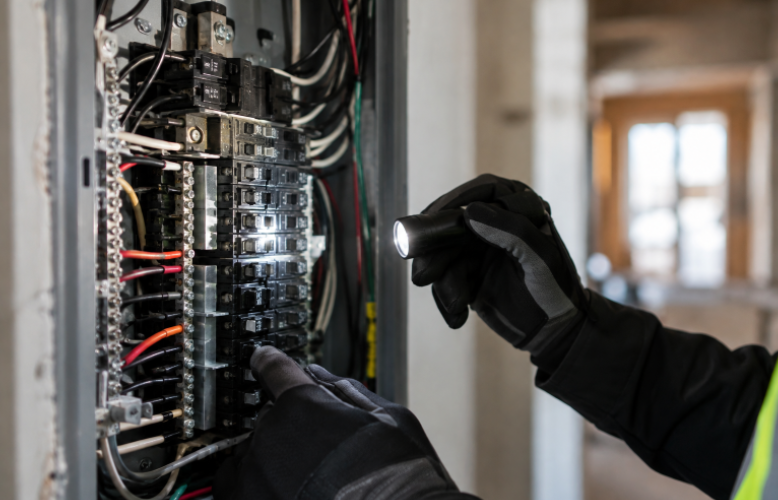
- Electrical components: Accessible panels, service equipment, visible wiring, outlets, grounding, and apparent safety concerns.
- Plumbing components: Accessible supply lines, drains, fixtures, water heaters, leaks, and drainage concerns.
- Heating and cooling equipment: Accessible HVAC equipment, distribution components, controls, exhaust, and apparent operational concerns.
- Interior areas: Walls, ceilings, floors, stairs, doors, windows, finishes, and visible evidence of wear or damage.
Using Technology and Targeted Testing to Investigate Concerns
Some property conditions require more than a standard visual review. J Charles Associates Home Inspection Services offers infrared scanning, which can help identify temperature differences that may indicate moisture, heat loss, or electrical issues. Infrared images support the inspection process, but they do not independently diagnose every cause of a temperature variation.
Radon testing is valuable for indoor-air assessment since radon is a radioactive gas that cannot be detected by sight or smell and requires testing to determine exposure levels. J Charles Associates Home Inspection Services additionally provides testing for mold, lead, well water, and septic fields. The choice of testing should be tailored to the building, its occupancy, and particular concerns.
Why Deferred Maintenance Deserves Attention Before Closing
Deferred maintenance can complicate a transaction and create operational uncertainty after purchase. Active leaks, damaged surfaces, inadequate drainage, aging equipment, and unresolved repairs can affect budgets, tenant comfort, business continuity, and future planning.
Although federal facilities are not a direct comparison to commercial buildings in Southeast Michigan, the broader lesson is relevant. The U.S. Government Accountability Office found that estimated deferred maintenance and repair backlogs at four selected federal agencies increased by about 83 percent between fiscal years 2017 and 2022. Its review illustrates why decision-makers benefit from identifying needs, prioritizing them, and planning for costs before problems grow.
Inspection findings can help a commercial client organize concerns into practical categories:
- Immediate safety issues or active water entry.
- Conditions that need specialist evaluation.
- Near-term repairs that may affect operations or negotiations.
- Longer-term maintenance and capital-planning items.
Inspection Options for Different Commercial Decisions
Full Commercial Property Inspections
A full inspection is appropriate when a client needs a broad review of accessible building systems and components. Buyers, investors, owners, and managers can use this option to gain an overall picture of property condition during due diligence or ownership planning.
Partial and Limited Inspections
A partial inspection focuses on a defined concern, such as a roof leak, foundation question, plumbing problem, moisture condition, drainage issue, or specific building area. This can be useful when the client does not need a full-property review.
Split Inspections and Verbal Consultations
J Charles Associates Home Inspection Services also offers flexible formats. A split inspection may begin with priority areas such as the roof, attic, and foundation, with the remaining inspection completed later. A verbal consultation can help a client discuss a specific concern before deciding whether a broader inspection is needed.
How Investors and Property Managers Can Use Inspection Findings
Investors can use inspection information to compare potential acquisitions and estimate likely repair needs. Property managers can request targeted inspections when recurring leaks, moisture complaints, drainage issues, or system concerns need closer attention. Owners can use documented findings to organize repairs and maintain a record of observed conditions.
An investor considering a multi-unit property may know that the roof is older, but not whether the concern is ordinary aging, drainage performance, attic moisture, or active water entry. A focused inspection can help distinguish between those possibilities and clarify the next questions to ask.
Understanding the Limits of a Commercial Inspection
A commercial inspection is generally a visual review of accessible areas and components at the time of the inspection. Inspectors may not move stored belongings, open finished walls, dismantle equipment, or confirm the condition of concealed areas. Specialized systems and significant concerns may require review by licensed contractors, engineers, environmental professionals, architects, or other qualified specialists.
That limitation is valuable because it sets realistic expectations. J Charles Associates Home Inspection Services can identify visible conditions that deserve attention and help clients decide where additional expertise is appropriate.
Requesting a Commercial Inspection in Southeast Michigan
When requesting service, be ready to share the property address, building type, transaction or ownership goal, known concerns, desired timing, and access limitations. Clients can also discuss whether a full, partial, split, or consultation-based inspection is the best fit. J Charles Associates Home Inspection Services can be reached at (248) 705-9955 to discuss commercial and multi-unit inspection needs in Southeast Michigan.